
Flutter
Make the most of this cutting-edge technology by developing apps quickly! Our Flutter solutions have amazing features that can be used to create sleek, high-performance apps that can scale seamlessly across platforms.



We aim to build applications that excel in all aspects. We consider customer satisfaction as the best award we could receive. In that journey, we have been recognized multiple times for the exceptional products we deliver.
Faster work process

Customer Review on Google
Successful projects accross the world
We are a team of highly dedicated mobile app developers that build cutting-edge mobile applications with the latest technologies.
About us
We cater to dedicated and tailored app development to help companies expand and achieve new heights. We deliver great features focusing on the latest technological advancement.

Our expertise in hybrid application development in Kerala, comes by integrating our agile methodology. We are the leading experts in hybrid application development.

Our rank booster packages reap maximum results for ranking mobile apps higher in the highly competitive niche. We get ahead with a proper ASO strategy crafted under our years of ASO experience.

Our landing page creation in a faster mode connects seamlessly with popular marketing platforms. We build efficient landing pages that crush your revenue goals.
We are a team of highly dedicated mobile app developers that build cutting-edge mobile applications with the latest technologies.
View all Services
Make the most of this cutting-edge technology by developing apps quickly! Our Flutter solutions have amazing features that can be used to create sleek, high-performance apps that can scale seamlessly across platforms.

Explore the endless possibilities of mobile app development with our Figma services. Design compelling apps and refine your tech skills, all while leveraging cutting-edge tools to make a meaningful impact in the industry. Appzoc ensures a seamless user experience.

From startups to enterprises, we specialize in creating Android app development services that drive growth. Our team at Appzoc focuses on developing apps that provide an outstanding experience across all Android devices and wearables.
Node.js, for its high scalability, simplifies the mobile application process and is widely used for real-time applications with many open-source libraries and frameworks. The server-side and client-side switches are easy with Node.js. Node.js developers can constantly publish new code making the app possible as and when needed.
We are a team of highly dedicated mobile app developers that build cutting-edge mobile applications with the latest technologies.
View all Technologies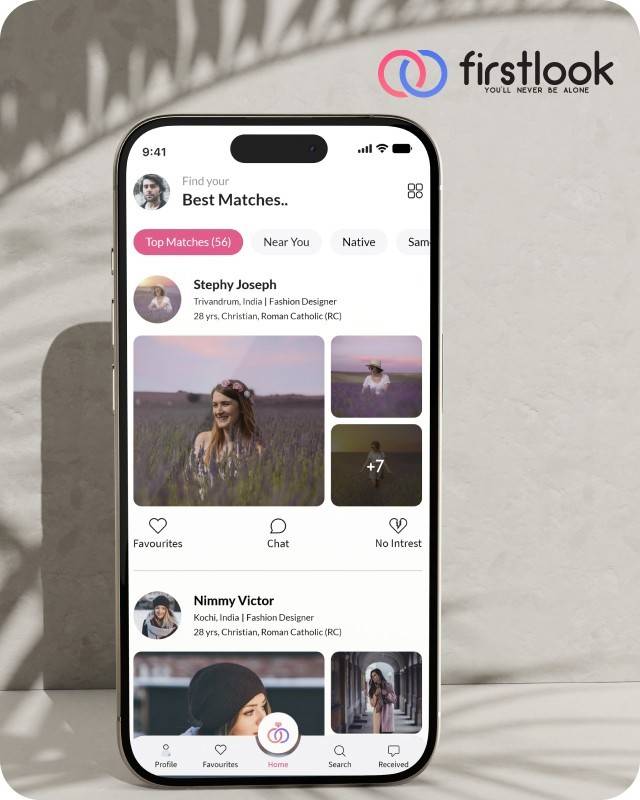
FirstLook Matrimony is a modern matchmaking app that helps you find your perfect life partner with personalized matches, easy chat options, and a secure platform built on trust.


Trustaurant is a travel-friendly food app that helps you discover and order from trusted restaurants nearby or along your journey, all in real-time.
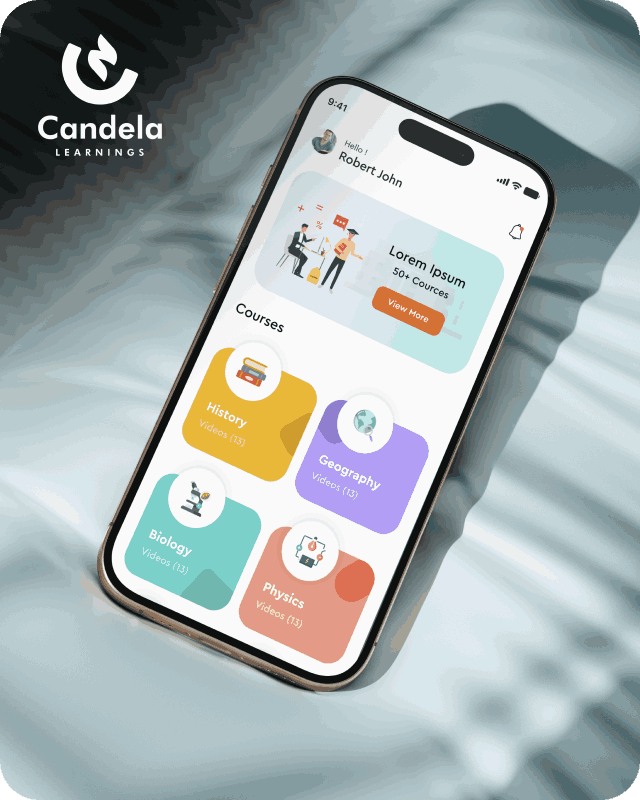
Candela Learnings is an engaging educational app offering interactive video courses in subjects like History, Geography, Biology, and Physics—all in one place.
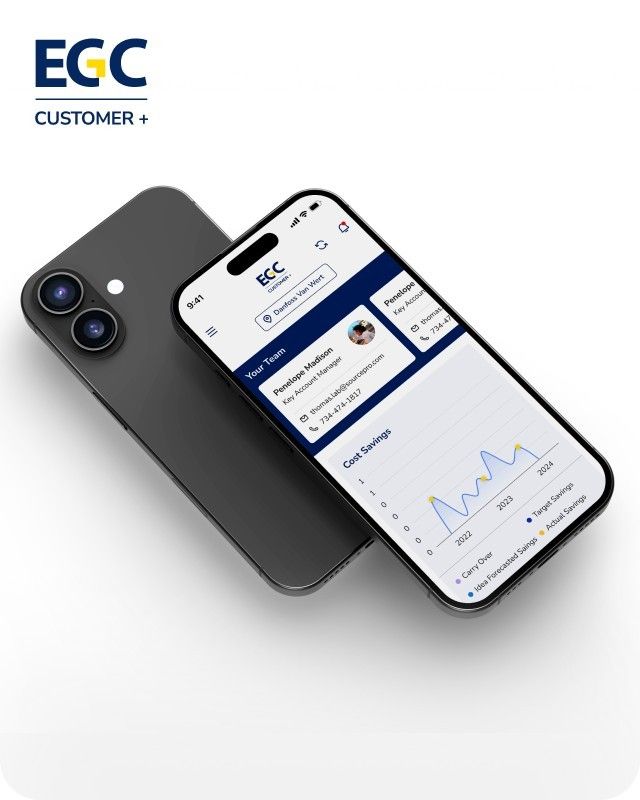
EGC Customer+ is a smart, user-friendly app designed to help you track cost savings, manage key contacts, and stay in control of your account performance—all in one place.
We are a team of highly dedicated mobile app developers that build cutting-edge mobile applications with the latest technologies.
View all WorksWe are a team of highly dedicated mobile app developers that build cutting-edge mobile applications with the latest technologies.
View more openings

Let’s be honest—many startups adopt methodologies reactively, not intentionally.
You adopt Agile because your first dev hire used it at his last job. You pick up DevOps habits when your deployment process becomes a Friday-night nightmare. You hear about Platform Engineering when someone mentions it—and everyone acts like they know it.
Sound familiar?
The reality is that most early-stage founders and CTOs do not sit down and choose an app development methodology the way they choose a tech stack. It just sort of happens. And that is fine — until it is not. Until the team is shipping slower than it should, or deployments are breaking things, or three different squads have set up infrastructure three completely different ways.
This piece is for the startup that wants to get ahead of that. We’ll explain Agile, DevOps, and Platform Engineering simply—so you can ship faster and stay on track.
Agile works in short cycles (sprints) instead of long plans. Each sprint is planned and delivered, with a scrum master removing blockers.
You ship, review, and improve—then repeat.
Who actually benefits from Agile?
The one thing Agile does not solve? What happens after your developer pushes code. Testing, building, and deploying code is a different challenge—that’s what DevOps solves.
DevOps connects development and operations for faster, reliable deployments.
CI/CD pipelines automatically test and deploy code when it passes.
Industry reports like the State of DevOps Report show that teams with automated pipelines and shared ownership deploy faster and more reliably.
DevOps isn’t just tools—it’s a mindset where developers and ops share responsibility.
DevOps starts making sense when:
One honest thing worth saying: a lot of teams claim to be doing DevOps when they are really just using some CI tools. That is a start. But DevOps without the cultural shift — shared ownership, shared monitoring, shared post-mortems — is really just automation with a label on it.
As teams grow, DevOps becomes more complex—especially without standardisation. Each team runs its own CI/CD pipeline. Every team is configuring cloud resources slightly differently. Every team is making their own calls on security and compliance. The cognitive overhead is enormous.
Platform Engineering is the answer to that. Build an internal platform for easy deployment. Use infrastructure as code to keep things consistent.
Gartner defines Platform Engineering as building internal platforms that improve developer productivity and standardise infrastructure.
You are probably ready for Platform Engineering when:
For most early-stage startups, Platform Engineering is a chapter three problem, not chapter one. But here is why it matters to understand now: the architectural choices you make in chapter one affect how hard chapter three is. Startups that plan for scale early tend to avoid major rework later—a pattern consistently seen in growing engineering teams.
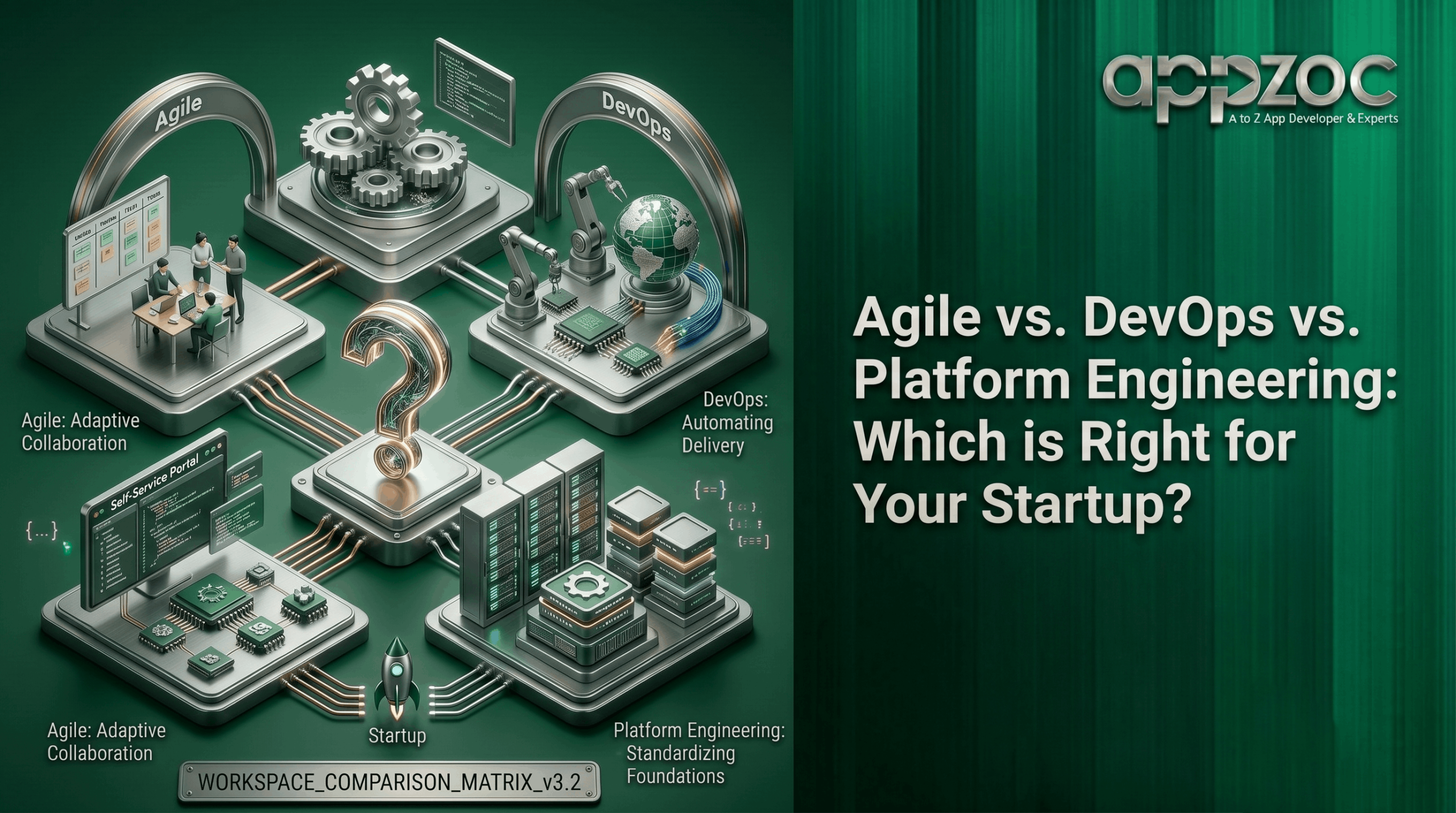
Think of it as layers: Agile is how teams work, DevOps handles delivery, and Platform Engineering supports scale.
Quick reference:
None of these replaces the others. They complement each other. The question is just which one your startup needs to prioritise right now.
There’s no one right approach—it depends on your team, product stage, and runway.
Go Agile-first if:
Layer in DevOps when:
Invest in Platform Engineering once:
One thing we see consistently — especially with startups working with mobile app developers in Bangalore — is that the strongest teams do not wait for the pain to force a methodology change. The app developers in Bangalore who deliver the best outcomes are the ones who advise clients on this early. Whether you are working with an individual mobile app development company in Bangalore or building an in-house team, asking about methodology before the first sprint is always time well spent.
What we have laid out here is not a one-time decision. It is a map. Most startups will move through Agile, pick up DevOps practices as they scale, and eventually — when the complexity demands it — invest in a platform layer. The teams that do this smoothly are the ones that understood the direction early, even if they were not ready to go all the way there yet.
The teams that struggle are the ones who bolt methodologies on reactively, when something has already broken badly enough to force the change.
At Appzoc, we help startups choose the right approach based on their team, product, and stage.
If your team isn’t moving as fast as it should, let’s fix that.
Reach out at www.appzoc.com.