
Flutter
Make the most of this cutting-edge technology by developing apps quickly! Our Flutter solutions have amazing features that can be used to create sleek, high-performance apps that can scale seamlessly across platforms.



We aim to build applications that excel in all aspects. We consider customer satisfaction as the best award we could receive. In that journey, we have been recognized multiple times for the exceptional products we deliver.
Faster work process

Customer Review on Google
Successful projects accross the world
We are a team of highly dedicated mobile app developers that build cutting-edge mobile applications with the latest technologies.
About us
We cater to dedicated and tailored app development to help companies expand and achieve new heights. We deliver great features focusing on the latest technological advancement.

Our expertise in hybrid application development in Kerala, comes by integrating our agile methodology. We are the leading experts in hybrid application development.

Our rank booster packages reap maximum results for ranking mobile apps higher in the highly competitive niche. We get ahead with a proper ASO strategy crafted under our years of ASO experience.

Our landing page creation in a faster mode connects seamlessly with popular marketing platforms. We build efficient landing pages that crush your revenue goals.
We are a team of highly dedicated mobile app developers that build cutting-edge mobile applications with the latest technologies.
View all Services
Make the most of this cutting-edge technology by developing apps quickly! Our Flutter solutions have amazing features that can be used to create sleek, high-performance apps that can scale seamlessly across platforms.

Explore the endless possibilities of mobile app development with our Figma services. Design compelling apps and refine your tech skills, all while leveraging cutting-edge tools to make a meaningful impact in the industry. Appzoc ensures a seamless user experience.

From startups to enterprises, we specialize in creating Android app development services that drive growth. Our team at Appzoc focuses on developing apps that provide an outstanding experience across all Android devices and wearables.

Node.js, for its high scalability, simplifies the mobile application process and is widely used for real-time applications with many open-source libraries and frameworks. The server-side and client-side switches are easy with Node.js. Node.js developers can constantly publish new code making the app possible as and when needed.
We are a team of highly dedicated mobile app developers that build cutting-edge mobile applications with the latest technologies.
View all Technologies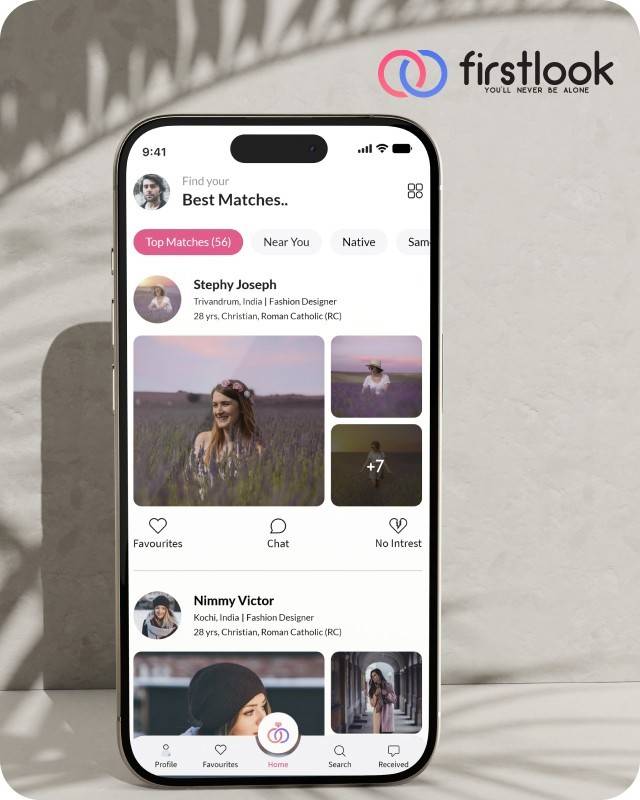
FirstLook Matrimony is a modern matchmaking app that helps you find your perfect life partner with personalized matches, easy chat options, and a secure platform built on trust.


Trustaurant is a travel-friendly food app that helps you discover and order from trusted restaurants nearby or along your journey, all in real-time.
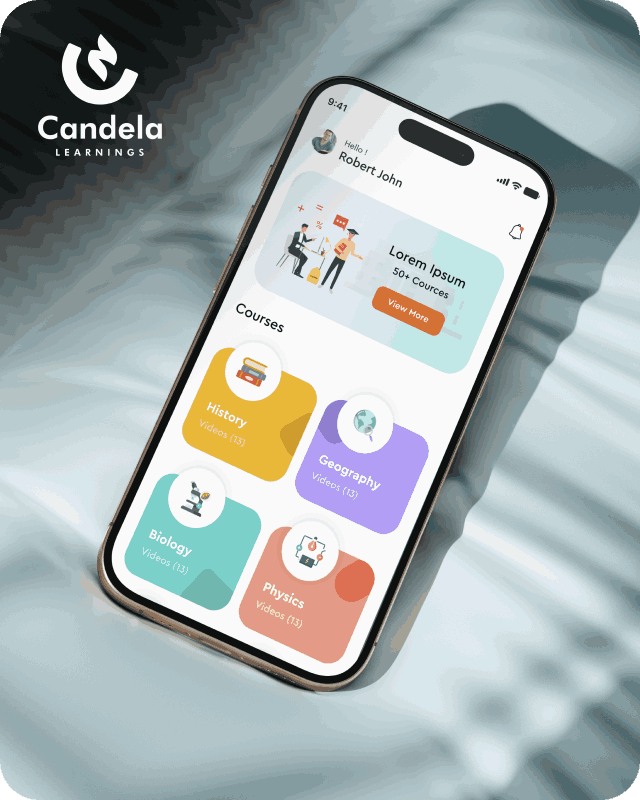
Candela Learnings is an engaging educational app offering interactive video courses in subjects like History, Geography, Biology, and Physics—all in one place.
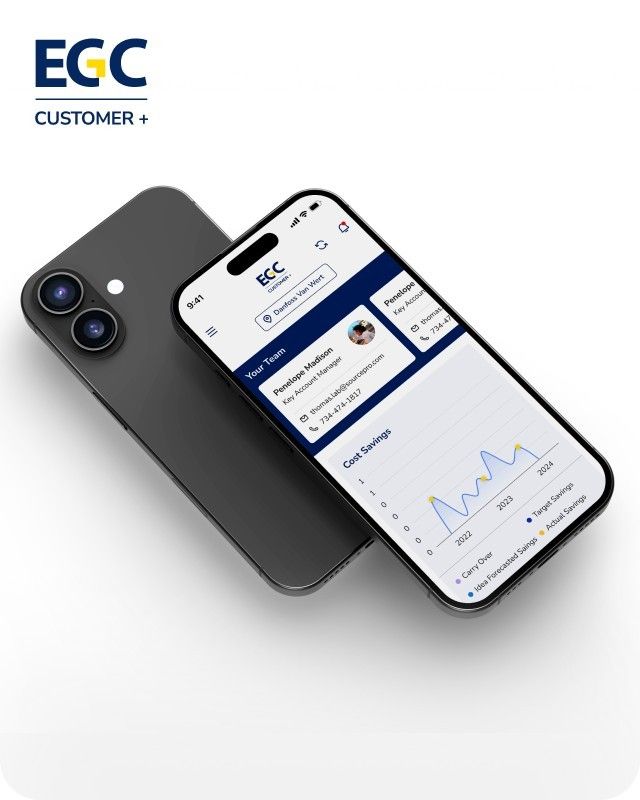
EGC Customer+ is a smart, user-friendly app designed to help you track cost savings, manage key contacts, and stay in control of your account performance—all in one place.
We are a team of highly dedicated mobile app developers that build cutting-edge mobile applications with the latest technologies.
View all WorksWe are a team of highly dedicated mobile app developers that build cutting-edge mobile applications with the latest technologies.
View more openings

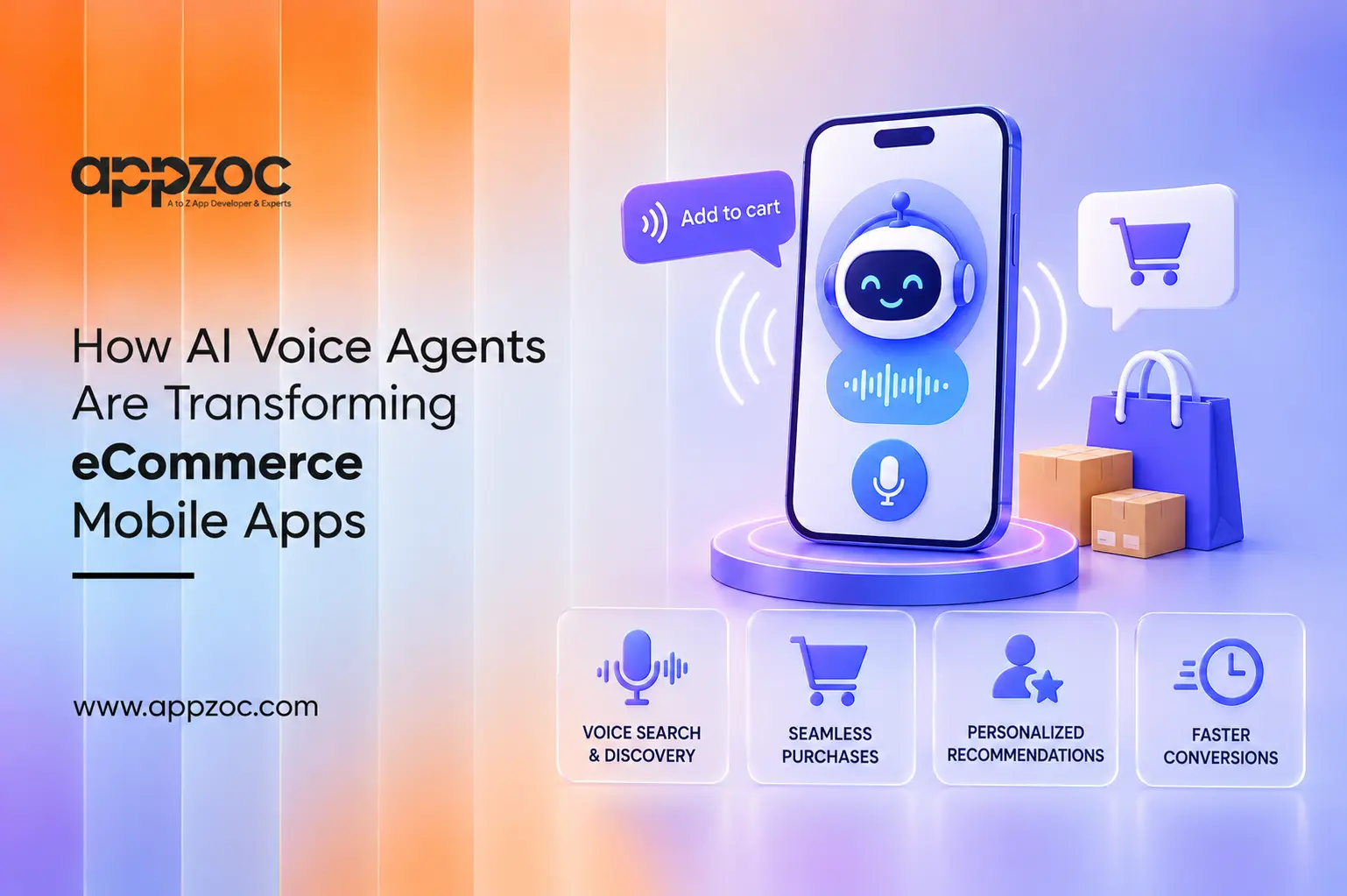
Shopping on a mobile app usually means typing, searching, scrolling, and tapping your way to the product you want. It works, but it can take effort, especially when you are not sure what you are looking for or when you are shopping while walking or multitasking.
AI voice agents are starting to change this experience. Instead of typing “black running shoes size 9,” a shopper can simply say it out loud and get a relevant response. This shift is making eCommerce apps more conversational and changing how customers search for products, make decisions, and get help. It is worth understanding what these tools can do, where they can help, and where they still have limitations.
An AI voice agent is a feature inside a mobile app that listens to what a customer says, understands the request, and responds in a useful way. It uses speech recognition to convert spoken words into text and natural language processing to understand what the customer means.
This is different from basic voice search. Voice search usually converts speech into a text query and runs it through the app’s normal search system. An AI voice agent can go further. It can have a short conversation, ask follow-up questions, access order information, and guide the customer towards a product or solution.
Here are a few examples of what a customer might say to a voice agent in a shopping app:
“Find black running shoes under $100.”
“Show me a gold necklace for a wedding.”
“Where is my order?”
To respond accurately, a voice agent needs more than speech recognition. It may need access to product information, pricing, stock levels, order details, and customer account information. These systems need to work together in the background to provide a useful response.
Businesses are adding conversational features to their apps for practical reasons, not simply to follow a technology trend.
Faster product discovery: Speaking a request can be quicker than typing, especially on a small mobile screen.
Less typing and scrolling: This is useful when customers need to enter longer search queries or go through several filters.
More personalised shopping: A voice agent can use a customer’s previous orders or preferences to make more relevant suggestions, when the customer has given permission to use that information.
Better customer support: Common questions about orders, returns, and delivery can be answered quickly without requiring a customer to wait for a support agent.
Easier navigation: Customers can ask for what they need instead of moving through several menus and screens.
Improved accessibility: Voice interaction can help people who find typing difficult or prefer speaking to navigating an app manually.
Potential for better engagement: A simpler shopping experience may encourage customers to spend more time exploring products and completing purchases.
However, adding a voice agent does not automatically increase sales. Its success depends on how accurately it understands customers, how well it connects with the rest of the app, and whether it actually makes shopping easier. A poorly designed voice feature can create frustration instead of solving a problem.
Instead of typing exact keywords, customers can describe what they need in their own words. For example, someone might say, “I need a lightweight laptop for office work under $800.”
A well-designed voice agent can understand details such as the product type, intended use, and budget, then show products that match the request. This can be more convenient than going through category menus and applying several filters one by one.
Voice agents can use information such as previous purchases, browsing activity, saved preferences, and the current request to suggest relevant products. If a customer regularly buys a particular brand or size, the agent can consider that information when making recommendations.
Personalisation needs to be handled carefully. Customers should understand how their information is being used and have appropriate privacy controls.
Customers often want to compare products before making a purchase. A voice agent can handle a request such as, “Compare these two phones by battery life and price,” and provide a simple summary of the key differences.
It can use information from product specifications, pricing, and other reliable data available in the eCommerce system. This saves customers from opening multiple product pages and comparing the details themselves.
A voice agent can work like a virtual shopping assistant by answering questions about sizes, colours, materials, stock availability, and delivery options. For example, a customer could ask, “Does this jacket come in medium?” and receive an answer without having to search through the product page.
This can be particularly useful when customers have specific questions before deciding whether to buy a product.
Voice commands can help customers add or remove products from their cart, check the items in their cart, or apply an available discount. These small actions can make the shopping process more convenient.
However, sensitive actions such as payment confirmation should still use appropriate security checks and user verification. Voice commands should not replace secure payment authentication.
Questions such as “Where is my order?”, “When will my package arrive?”, or “Can I return this product?” are common in eCommerce. A voice agent can answer these questions using order information or connect the customer with a human support agent when the request is too complex to handle automatically.
This can reduce the need for customers to search through order pages or wait for an initial response from customer support.
Voice interfaces can make shopping easier for people who are more comfortable speaking than typing. They can also help older users and people who may find traditional app navigation difficult.
Support for multiple languages can help eCommerce businesses serve customers from different regions. However, voice recognition accuracy can vary depending on the language, accent, and environment. Testing with real users is important before expanding the feature to a wider audience.
A useful way to understand the value of voice agents is to look at the complete customer journey: discover, search, compare, decide, buy, track, and get support.
During discovery and search, voice input can replace lengthy typing with a quick spoken request. During comparison and decision-making, an agent can summarise product differences without requiring customers to move between several pages. At checkout, voice commands can help with simple actions such as adding products or checking the cart. After a purchase, customers can use voice to track their order or ask questions about delivery and returns.
The real value is not simply adding a microphone button to an app. It is about reducing unnecessary steps and making the entire shopping journey easier from beginning to end.
Businesses considering an AI voice agent should keep a few practical points in mind:
Start with common customer needs: Begin with useful tasks such as product search and order tracking instead of trying to automate everything at once.
Keep conversations simple: Customers should not have to repeat the same request several times.
Offer other ways to interact: Users should always be able to switch to text or traditional app navigation when they prefer.
Use accurate product data: The voice agent should connect to up-to-date information about products, prices, stock, and orders.
Protect customer information: Personal, account, and payment information should be handled using appropriate security measures.
Be transparent about AI: Customers should know when they are interacting with an AI system.</li>
Make human support available: Customers should have an easy way to reach a human when the AI cannot resolve their issue.
Test real-world conditions: Test the system with different accents, languages, speaking styles, and background noise.
Keep improving the system: Review customer interactions and feedback after launch to identify areas that need improvement.
A voice agent should make shopping easier, not give customers another system they have to learn how to use.
There is no single voice AI setup that works for every eCommerce business. The right approach depends on factors such as the app platform, customer base, product catalogue, existing backend systems, available APIs, payment methods, and security requirements.
A small online store with a simple product catalogue will have different requirements from a large marketplace with thousands of products, complex inventory systems, and multiple payment options.
For this reason, businesses should choose their technology based on their actual requirements instead of simply copying the approach used by another company.
Adding an AI voice agent to an eCommerce app involves more than placing a microphone icon on the screen. The voice system needs to work with product search, customer accounts, inventory, cart management, checkout, order tracking, and backend APIs.
WebCastle helps businesses plan and build mobile applications based on their specific business requirements. As a mobile application development company in Kerala, the team can help businesses evaluate where AI-powered features can add real value and how they can be connected with the existing app and backend systems.
For businesses developing apps for Apple devices, choosing an experienced iOS app development company in Kerala can also help with building reliable voice features while maintaining app performance, security, and usability.
The right development partner can help businesses decide which voice features are practical for their product catalogue, customers, budget, and long-term goals.
Also Read: How Voice-Enabled Features Drive Better Mobile App Engagement
AI voice agents are making eCommerce apps more conversational and reducing the need for customers to rely entirely on typing and scrolling. Their real value comes from helping people search, compare, buy, track orders, and get support with fewer steps.
Businesses considering voice AI should base the decision on their customers, product catalogue, existing technology, and privacy requirements rather than adding it simply because it is a current trend. A voice feature that solves a real customer problem will always be more useful than one added just to keep up with competitors.